Let customers experience the product before they own it.
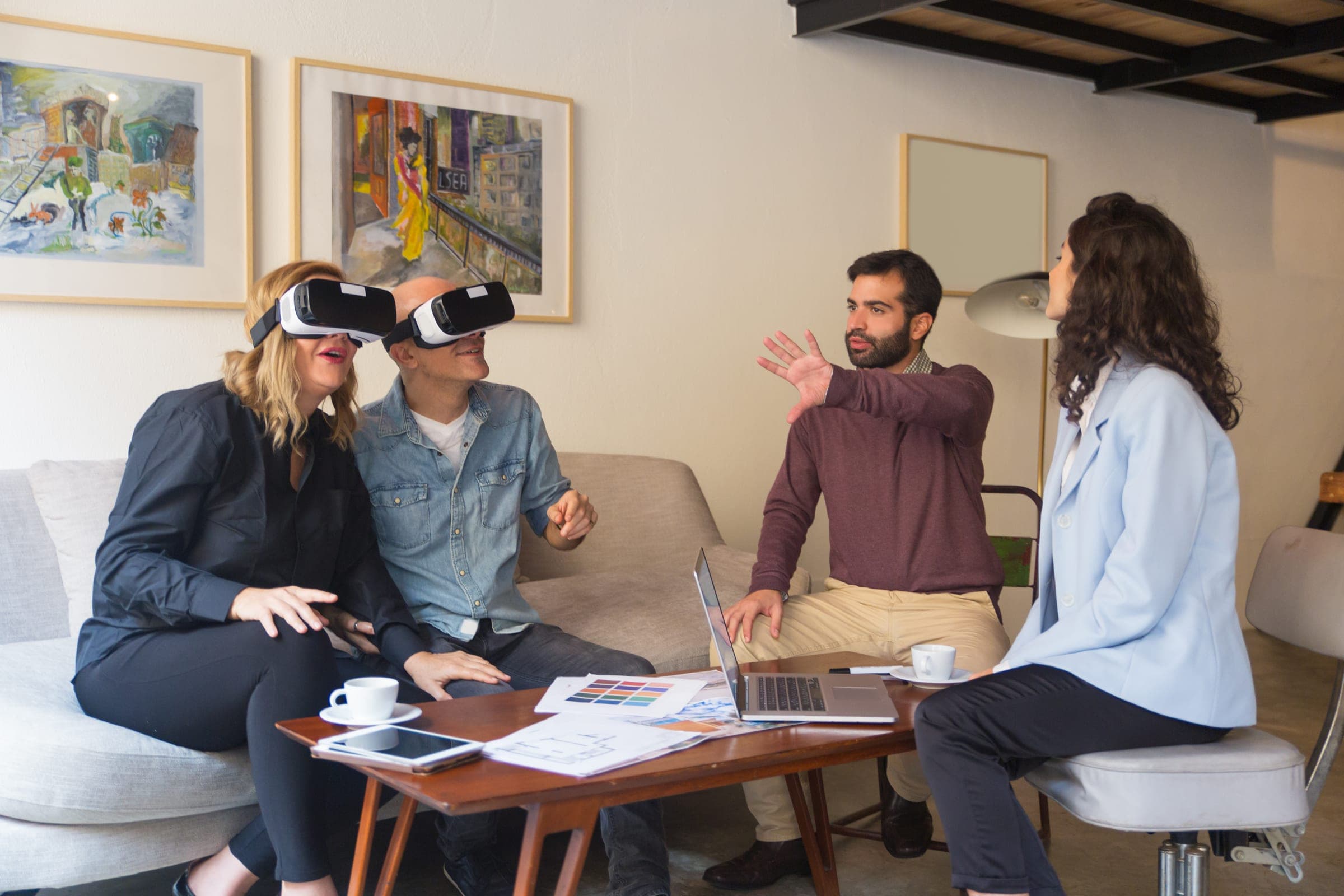
Most augmented reality campaigns die at the install prompt.
An agency builds a polished native app, the brand puts a QR code on a poster or a shelf edge, and the activation loses most of its audience at "download to continue". We build AR that runs in the browser instead: the customer scans a code, the camera opens, the experience starts. Nothing installed, on the phone already in their hand. That choice is the whole campaign, because reach in AR is decided before a single frame is designed. An experience that needs an app reaches the people willing to install one. An experience that opens in a browser reaches everyone who sees the poster, the pack or the stand. For a campaign measured on participation, those are not close. The hard part is not concepting it. It is holding a usable frame rate on a four-year-old Android over venue wifi, keeping tracking stable in shop lighting, and loading fast enough that a customer in an aisle does not give up waiting. That engineering is the usual reason an activation underperforms its storyboard, and it is what we do. If you already have a creative or media agency, we are happy to work to their storyboard rather than replace them. We start from the buying decision the experience is meant to unblock, then work backwards to the lightest technology that removes it. A fit for retail, consumer goods, property and product design, where customers hesitate because they cannot picture the thing in their space or on themselves until it is too late to change their mind.
Standard ads get scrolled past in seconds. Fastnexa builds AR/VR immersive marketing experiences that put your audience inside your brand story and keep them there. From virtual product try-ons and interactive 3D catalogs to full VR environments and gamified activations, we use spatial computing to lift engagement, deepen emotional connection, and move more buyers to purchase.
Our 3D artists and experience designers build high-performance experiences with Unity, Unreal Engine, and WebXR. We deliver virtual showrooms, branded AR filters for Instagram, Snapchat, and TikTok, interactive product configurators, and immersive activations across metaverse venues including Spatial, Horizon Worlds, and custom builds, each one tied to engagement and conversion metrics you can track.
Browser-Based Camera AR, No App Install
QR & Link Activation for Print, Packaging and Out of Home
Surface, Face and Body Tracking in the Browser
3D Product Visualization & Configurators
Virtual Showrooms & Immersive Product Galleries
Performance Tuning for Mid-Range Android and Venue Wifi
3D Asset Preparation from CAD and Product Photography
Analytics & Conversion Tracking on Immersive Journeys
Three.js
WebGL
React
TypeScript
Blender
Python
FastAPI
Docker
From concept to launch, we follow a structured process that turns AR/VR ideas into immersive campaigns audiences remember and engagement you can measure.
We design AR/VR marketing strategies that create memorable brand experiences and drive customer engagement.

Identify optimal AR/VR applications: virtual showrooms, product demos, or branded experiences.
Choose platforms: WebAR, mobile AR (ARKit/ARCore), VR headsets, or metaverse.
Design immersive customer journeys maximizing engagement and brand recall.
Plan 3D assets, interactions, and technical requirements for AR/VR deployment.
Our immersive technology experts build engaging AR/VR experiences with stunning 3D content and interactive elements.

Create photorealistic 3D models and animations of products or environments.
Build AR apps enabling virtual product placement and try-before-buy experiences.
Develop immersive VR environments for virtual events, showrooms, or brand experiences.
Implement gamification, quizzes, and interactive features driving engagement.
We launch AR/VR experiences and integrate them into broader marketing campaigns measuring engagement and ROI.

Deploy across web, mobile apps, social media filters, and VR headsets.
Integrate AR/VR into paid ads, social campaigns, and experiential marketing.
Track user interactions, session duration, and conversion metrics.
Design shareable moments encouraging social sharing and virality.
Platforms and products our team designed and built. This is our own work, shown as it was built, with no client results claimed.
Each of these is a browser experience opened from a code or a link. None of them asks the customer to install anything.
A code on the pack opens an experience on the product the customer is already holding: provenance, how to use it, a game, a competition entry. Turns a box that gets thrown away into a channel you own.
In aisle, on their own phone, in the seconds they are deciding. The point is not novelty, it is removing the last doubt while the product is within arm's reach.
Magazine spreads, billboards, direct mail and bus shelters become entry points instead of endpoints. The medium you already paid for starts producing measurable sessions.
Everyone walking past experiences it at once on their own device, rather than four to six people an hour queueing for a headset. It also survives the event, because the link still works at home.
A catalogue the customer walks through rather than scrolls, for ranges too large, too expensive or too physically awkward to stock everywhere.
Colour, finish, size and options changing on a 3D model in real time, ending on a specification the customer can send straight to your sales team.
Common questions about our digital marketing services, strategies, and results.
Written by the engineers who do the work, and honest about the limits.
Arguments from our marketing & innovation practice.
More from Marketing & Innovation.
Data-driven growth marketing.
Organic search and content strategy.
Lifecycle and campaign automation.
Marketing intelligence and forecasting.
Marketing for Web3 products.
Related reading:Fastnexa Blog
Have a project in mind? Contact us for expert design and development solutions. Let’s discuss how we can help grow your business.
For our first 10 founding clients, until 31 December, we're covering the cost of a full vulnerability assessment and penetration test. Tick the claim box and we'll scope it with you.
Testing and the report are free. Fixing what we find is quoted separately, with no obligation to accept. In return we ask for permission to publish an anonymised case study.
Read the full offerTell us what you are trying to build and we will tell you plainly whether we are the right people for it. Book a call with an expert to work through the detail, or ask for a fixed quote if the scope is already clear. No obligation either way.

© 2026 fastnexa. All rights reserved.
